Charitable initiative in development · Pilot in planning

Every Family Deserves Protection. Every Legacy Deserves a Chance.

Expanding access to estate planning, empowering underserved communities, and helping bridge the generational wealth divide.

Legacy Without Barriers is developing free, community-centered legal clinics that connect families with education, qualified legal professionals, and practical pathways to essential legal protections.

An adult daughter sitting beside her elderly mother at a kitchen table, looking together at paperwork and a laptop in soft window light.
Programs
Power to Protect pilot is planned — not yet holding sessions
Structure
Exploring fiscal sponsorship with qualified nonprofits
Participation
Free, and never tied to buying any company's services
Our programs

Three charitable program pillars

Each pillar shows where it stands today, so families and partners can see what exists now and what is still being built.

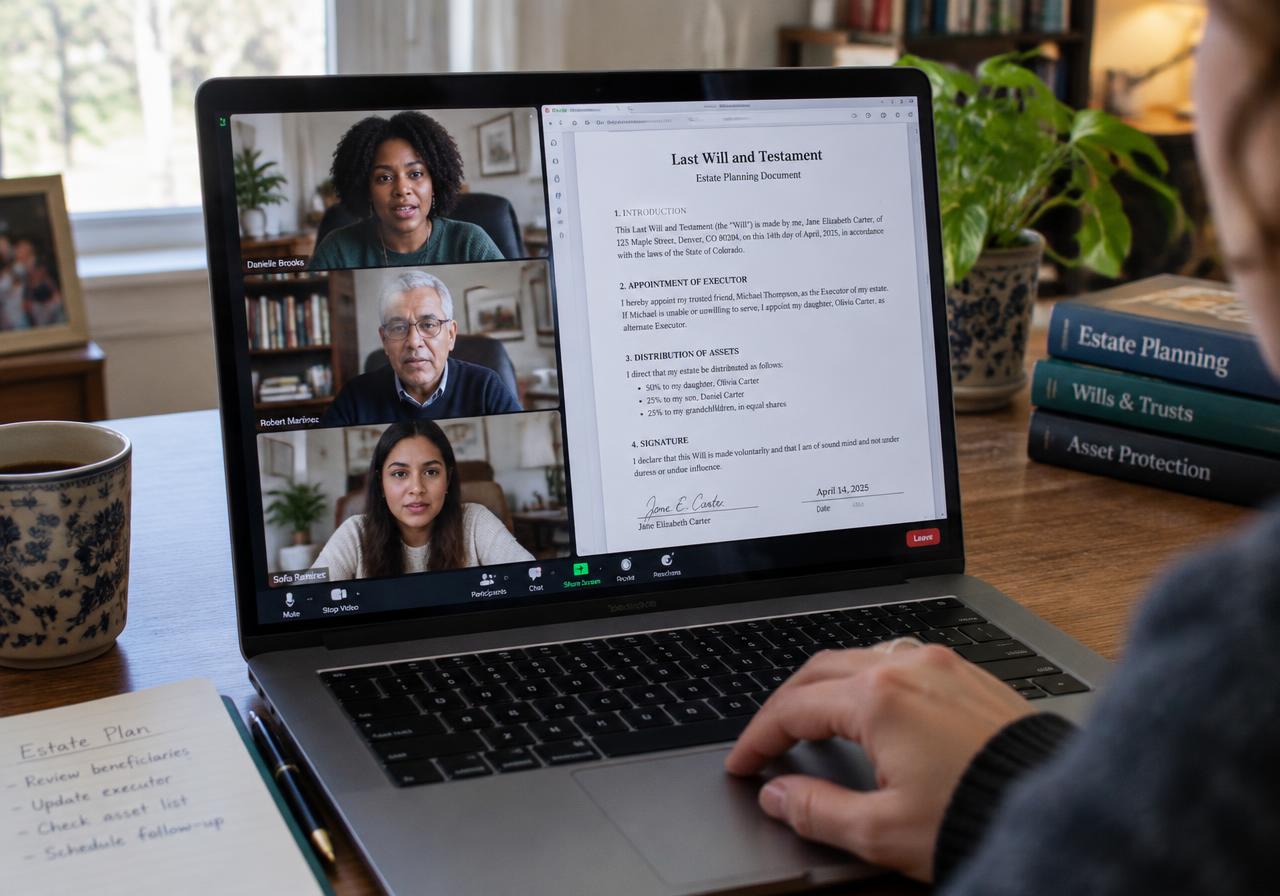
A laptop screen showing a virtual legal clinic video call with three participants and an estate planning document shared on the right side of the screen.
Pillar 1Pilot planned

Legal Access

Free, accessible virtual legal clinics that help underserved families understand and complete essential estate planning documents.

  • First pilot: Power to Protect, focused on Powers of Attorney
  • Education, attorney consultation, and document assistance
  • Future programs may include advance health care directives, wills, and trusts
About the free clinics
Pillar 2In development

Community Empowerment

Practical education, legal preparedness, and culturally responsive programming, delivered with trusted community organizations.

  • Focus on BIPOC households, people with disabilities, caregivers, older adults, and financially underserved families
  • Plain-language workshops and preparedness materials
  • Outreach through mission-aligned community partners
Pillar 3Planned

Workforce Development

Training and paid opportunities for qualified notaries and legal support professionals from overlooked communities.

  • Potential participants include veterans, neurodiverse individuals, returning citizens, older adults, and people from under-resourced communities
  • Training and certification pathways are planned, not yet operating
  • To be designed with community and nonprofit partners
Why this matters now

A historic wealth transfer is already underway.

An estimated $124 trillion is expected to pass between generations through 2048 (Cerulli Associates, 2024 ↗). Yet most people are not prepared.

Families need more trusted, accessible help to complete and sign these documents.

Wealth in motion
$124T

Expected to transfer between generations through 2048.

Source: Cerulli Associates, 2024 ↗

68%
of Americans without a will · Source: Caring.com Wills Survey, 2024 ↗
The problem

The gap in access

Estate planning protects families, supports decision-making, and preserves dignity. Yet millions of people never complete even the most basic documents.

Common barriers

  • Cost
  • Complexity
  • Lack of trusted guidance
  • Systems that were not built for everyone

When there is no plan, families face

  • Court involvement and delays
  • Increased conflict
  • Loss of control over decisions
  • Loss of generational assets
The equity gap

Who is most impacted

Access to estate planning is not equal. The communities that most need legal protection often have the least access to it.

A Black family seated at a dining table reviewing printed legal documents in soft natural light.

Households of color

In a 2025 national survey, 16% of Black and 14% of Hispanic respondents had a will, compared with 28% of White respondents.

Source: Caring.com Wills Survey, 2025 ↗

A same-sex couple sitting together on a sofa at home, quietly reviewing paperwork on a coffee table.

LGBTQ individuals

Often need additional legal protections to ensure loved ones are recognized and rights are upheld.

A caregiver helping an older parent in a wheelchair review documents at a small dining table.

Disabilities, caregivers & complex families

People with disabilities, their caregivers, and non-traditional families face higher barriers to access.

Access to estate planning is an equity issue.

By the numbers

The estate planning gap

68%
of Americans do not have a will
36.7%
of U.S. adults have any advance directive
16% vs. 28%
of Black vs. White respondents had a will
$124T
in wealth expected to transfer between generations through 2048

Closing this gap will take community partnerships, accessible legal help, and a trained, trusted workforce.

Close-up of hands signing a printed legal document with a fountain pen at a desk in soft natural light.
How this started

Born from years at the signing table.

Legacy Without Barriers grew out of our founders’ years helping estate planning attorneys and their clients complete and sign important documents across the country.

That work showed them how often families reach a medical, financial, or caregiving crisis without basic protections in place — and how much harder it is to get help for households that legal and financial institutions have historically underserved.

Legacy Without Barriers is their response: a charitable initiative built around education, community partnerships, accessible legal services, and workforce opportunity, with a purpose distinct from the founders’ businesses.

Read about our origins, governance & accountability
An adult child sitting beside their elderly parent at a kitchen table at home, helping them review estate planning documents in soft natural window light.
AccountabilityProposed measures — no results reported yet

How we intend to measure success

We will publish verified outcomes only after programs have run. Until then, these are the measures we plan to track.

  • Families receiving legal education
  • Eligible participants receiving legal consultations
  • Documents successfully completed and executed
  • Barriers to legal access identified and reduced
  • Legal support professionals trained or employed through future programs
  • Community partnerships established
Planned pilot

Power to Protect: our first clinic pilot

A free virtual clinic focused on Powers of Attorney, with goals set for participants, completed documents, and participating attorneys and notaries.

Our vision

A future where every plan is possible.

  • Every person has essential estate planning documents
  • A trained, trusted workforce exists in every community
  • Legal help is accurate, accessible, and culturally responsive
  • Families retain control, dignity, and assets
Partner with us

Help launch a proposed charitable pilot.

We are seeking support to launch Power to Protect and build the programs behind it. We are also exploring fiscal sponsorship with qualified nonprofit organizations.

We intend to choose professional service providers through fair, mission-driven processes. No related business will receive exclusive or automatic preference.

Start a conversation
We are looking for
  • Qualified fiscal sponsors
  • Community-based organizations
  • Volunteer & participating attorneys
  • Commissioned notaries
  • Philanthropic foundations
  • Corporate & institutional supporters
  • Community outreach partners
A note on giving. Legacy Without Barriers does not yet have a fiscal sponsor or 501(c)(3) status, and is not accepting tax-deductible donations at this time. We will share how to give once an approved structure is in place.
Get in touch

Tell us about your areas of interest

Share a few details and we’ll follow up about clinics, volunteering, partnership, or fiscal sponsorship.

Areas of interest

Select all that apply — we’ll tailor our follow-up to you.

We use what you share only to respond to you and send updates about Legacy Without Barriers.

Legal Access. Community Empowerment. Workforce Development.

Every family deserves protection. Every legacy deserves a chance.